Small Changes, Big Impact

On-Site Sustainability Audit
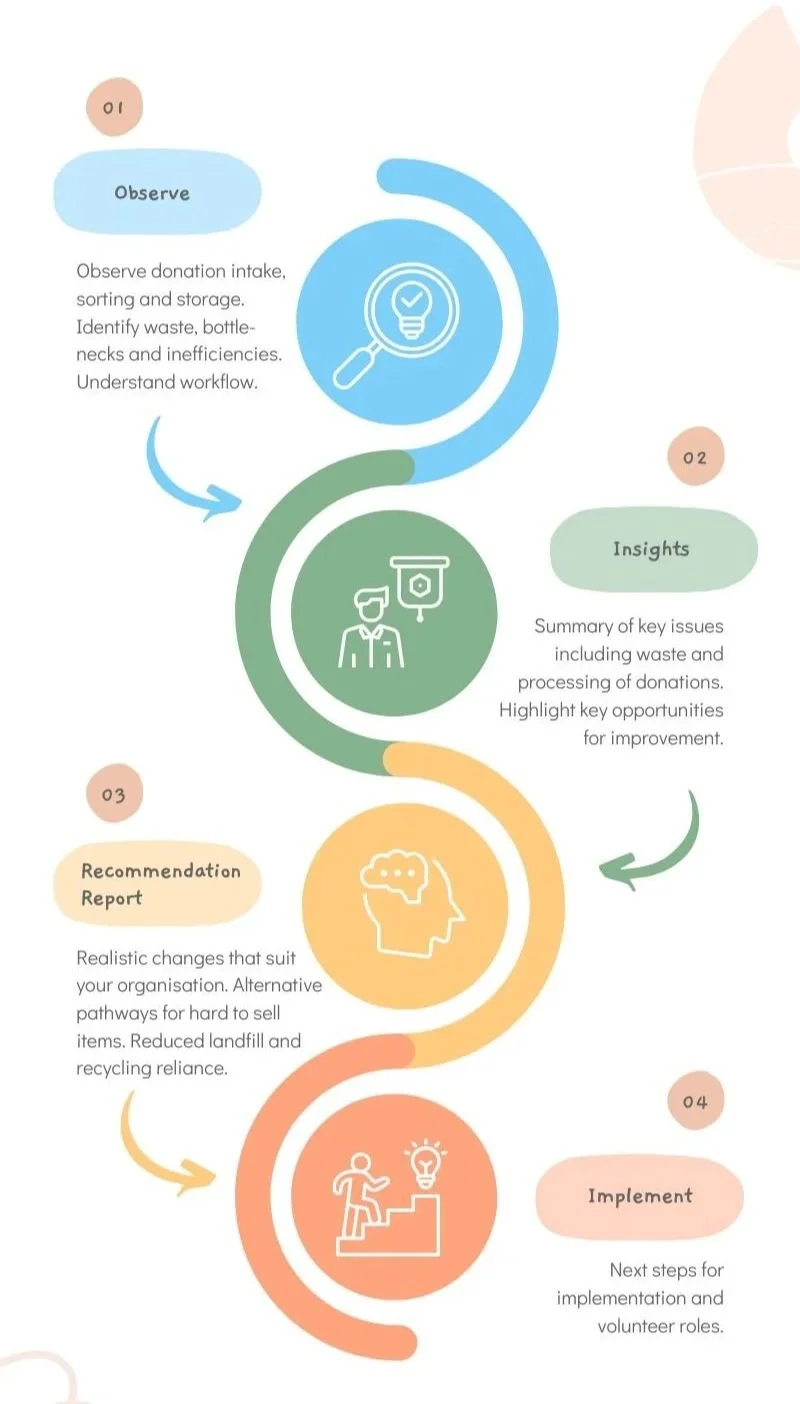
I spend time in your organisation observing how donations move through the space, from intake and sorting through to sales, reuse, recycling, or disposal. I focus on day to day operations, identifying bottlenecks, inefficiencies, and areas where unnecessary waste is being created.
Findings & Practical Recommendations
Following the audit, you’ll receive a clear summary of key findings and realistic recommendations tailored to your shop’s size, resources, and volunteer capacity. This will become a practical road map for improving efficiency and sustainability.
What This Can Help With
Reducing landfill and textile recycling reliance
Improving donation flow and sorting efficiency
Creating reuse pathways for hard-to-sell or excess stock
Reducing volunteer decision fatigue and burnout
Making better use of limited storage and back-of-house space
Aligning sustainability goals with day-to-day realities
Who This Is For
This service is ideal for:
Independent and community-run thrift shops
Small charities and church-run stores
Shops experiencing excess donations or waste challenges
Organisations seeking practical sustainability solutions, tailored to them
About the Consultant
Amber Sojenka is the Director of Henley Opportunity Shop and the founder of Local Thrift Project.
With over 17 years of hands-on experience operating within op shops, Amber specialises in turning charitable waste into practical reuse solutions that benefit both communities and the environment.
Enquire or Book a Consultation
To discuss your shop’s needs or book a sustainability audit, please get in touch.
Thrift Shop Sustainability Consulting
Thrift shops play a vital role in reuse, but many are overwhelmed by rising donations, limited space, and increasing waste costs.
Local Thrift Project offers sustainability consulting designed specifically for thrift shop management. Practical, realistic, and grounded in day-to-day shop operations.
This service helps thrift shops reduce landfill, streamline donation sorting, and create meaningful reuse pathways for hard-to-sell items, without adding extra pressure to staff or volunteers.