
On May 29th, 2025, as part of the Green Industries SA Circular Impact Accelerator, I pitched Local Thrift Project and proudly took out the $5,000 top prize. This recognition highlights the impact and potential of bringing circular solutions into our local op shop sector. Below is a copy of the presentation which explains the Local Thrift model.
Hello! I’m Amber from the Henley Opportunity Shop—and this is terrifying for me, so just know I’m imagining you all naked. Which honestly isn't helping at all.

This is how I started the Circular Impact Accelerator—bursting with ideas, but no clear direction. I’d just left a local charity where I witnessed heartbreaking waste every day—and where my ideas for circular solutions went ignored. As a volunteer in the same organisation I was saving thousands of books from landfill—I sorted 4 tonnes of books a week for four years and redistributed them to childcares, community centres, foodbanks—even built a school library. I knew I had the experience and could build a network to deal with charitable waste better. So I took over Henley Opportunity Shop and began working on the Local Thrift Project—a “thrift shop done differently.” Six intense weeks later—with the Accelerator’s support—I’ve clarified my focus and I’m ready to grow our impact.
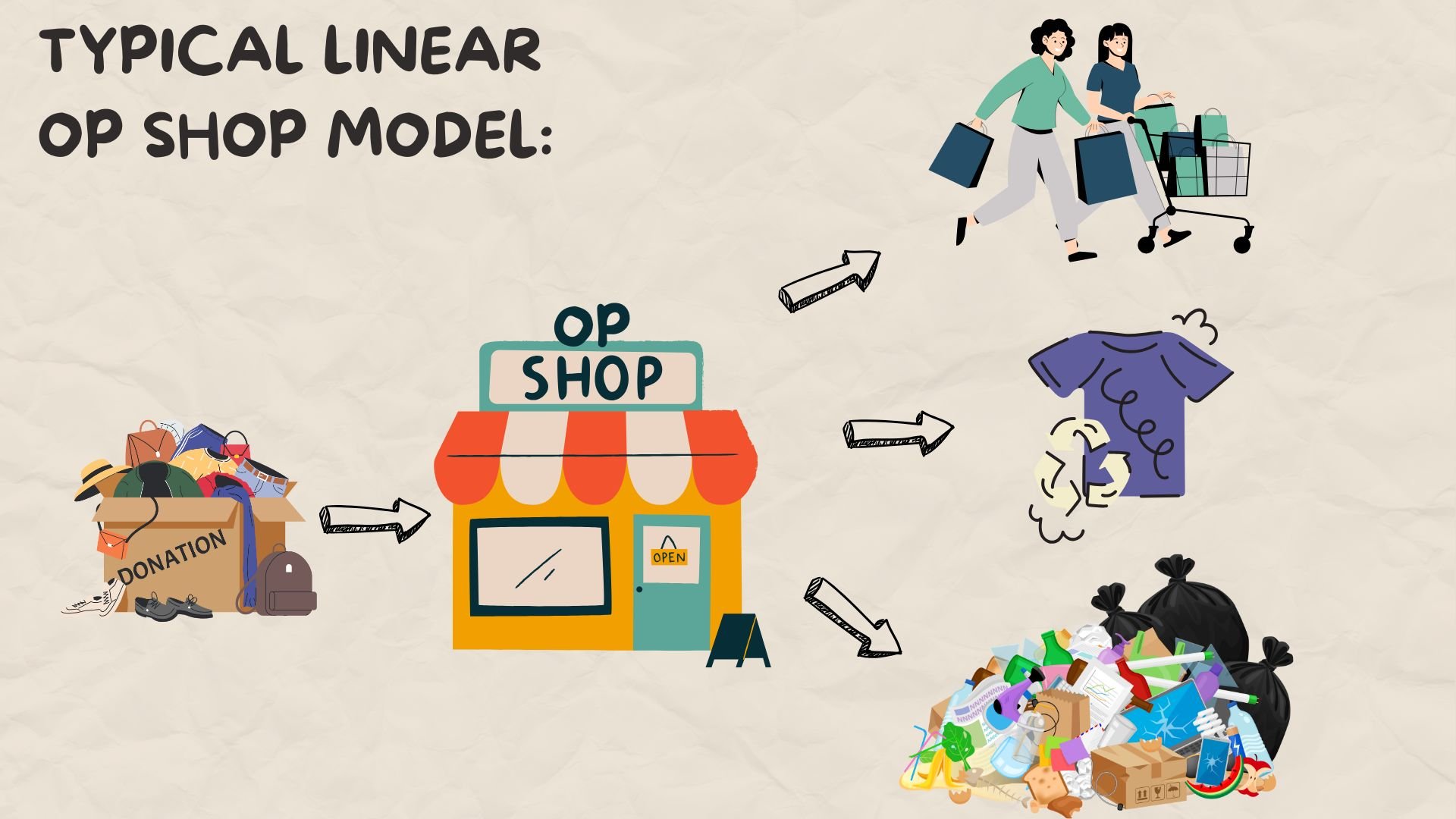
Most op shops follow a linear system: Donations come in Items that seem worth selling are sold in store Everything else? Off to textile recyclers—or landfill There’s little room for creative reuse, redistribution, or community repurposing. These stores often lack transparency about what they do with their excess and solutions that don’t turn a profit are not given an opportunity. That charity I mentioned I left earlier received over $30,000 in waste levy subsidies in 2023/24 but behind the scenes they don't have basic recycling in place for simple items like batteries. Every book they received was thrown away until I did something about it. So I'm asking, why is there not a minimum standard of recycling to be met before becoming eligible for these huge subsidies? I want change in the secondhand sector. We are doing things differently with the hope that others will stand up and take notice.
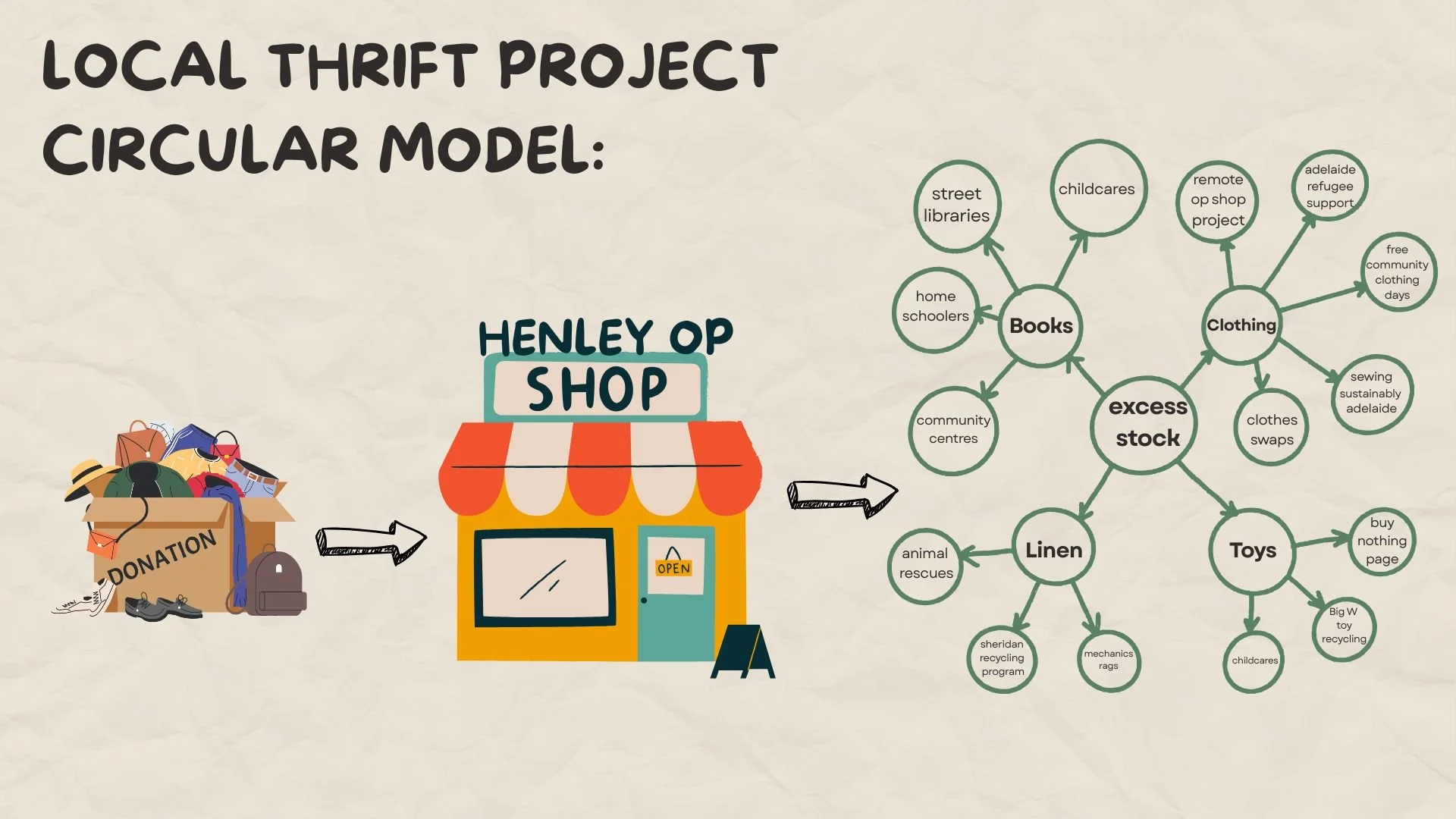
HERES HOW WE ARE DOING IT DIFFERENTLY: We operate an affordable op shop in Henley Beach that has been servicing the community for over 50 years and here we’ve built a flexible, growing network to reuse and redistribute excess and hard-to-sell items With this model we can respond directly to community needs: a local childcare needs books, we can help the QEH needs spare pyjamas for patients, we've got it covered The remote op shop project needs winter clothing, we are all over it. (Our network can be replicated and reimagined, it can pivot and evolve depending on community need and is only limited by our imagination for creative solutions. This blueprint can become the benchmark for charity donation processing and its something we are continuing to work on.
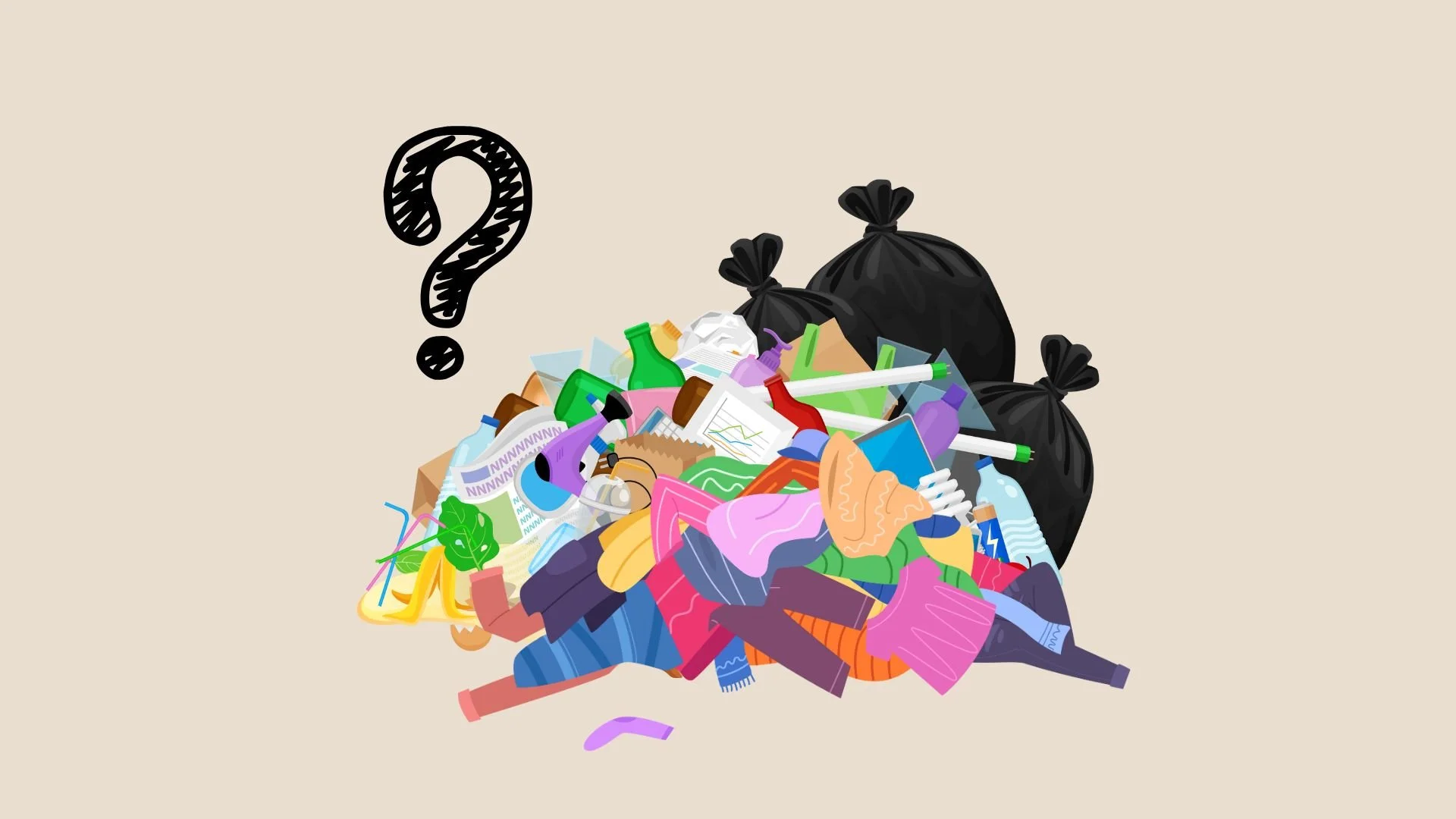
But what do we do with the pile of items we can’t sell or redistribute? We are turning what others see as rubbish into resources for our:
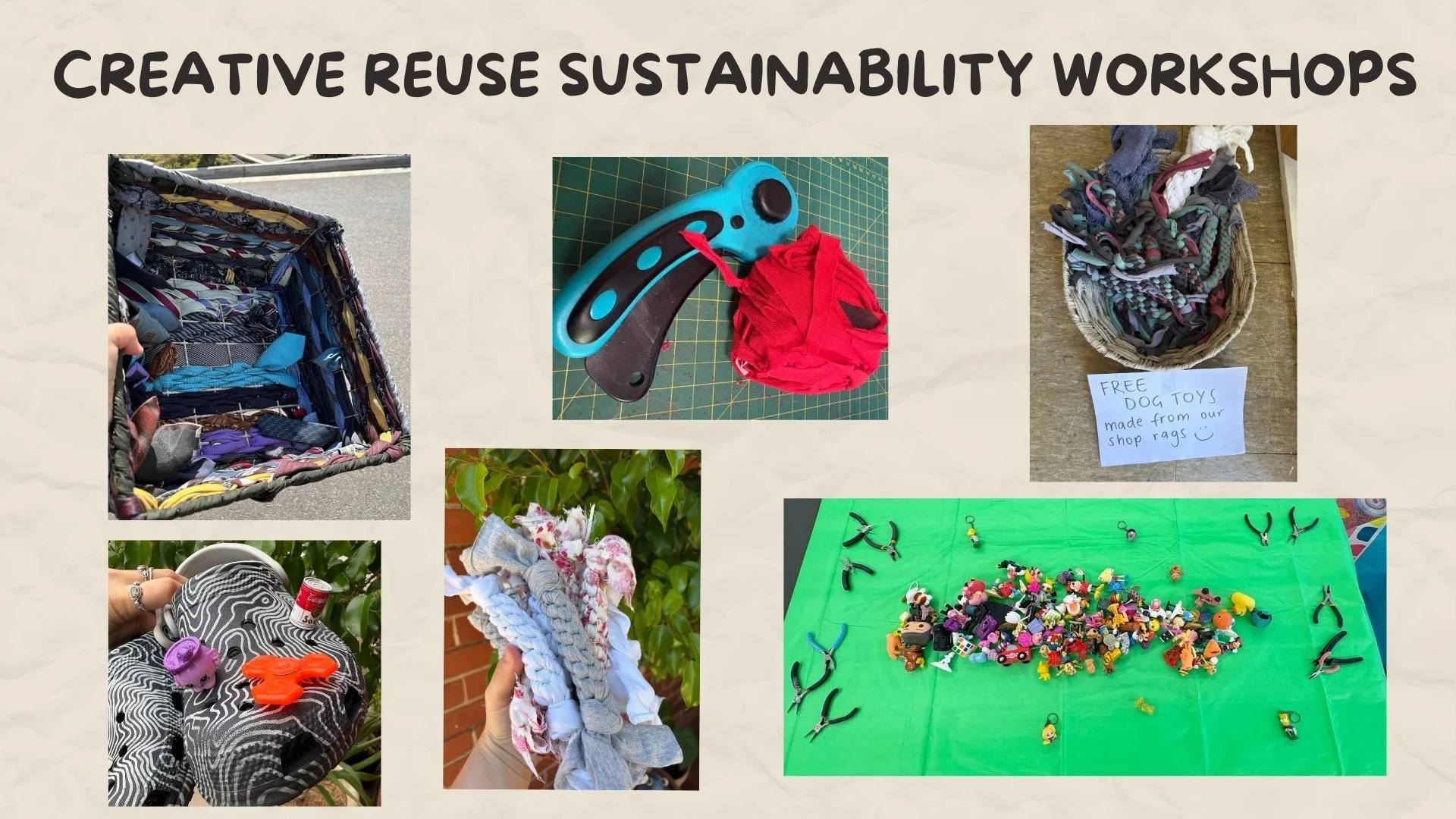
sustainability workshops! These hands on DIY workshops focus on creative reuse: Old tshirts into pet toys and yarn Using textiles to repair old wire baskets to display clothes swap items Broken bric a brac and crockery into mosaics Small toys into magnets and keychains We’ve already locked in long-term community partnerships, with more in the works. Through Sustainability Saturdays at Ngutungka West Lakes we hold a monthly clothes swap and run a workshop built around whatever excess we have available that month.
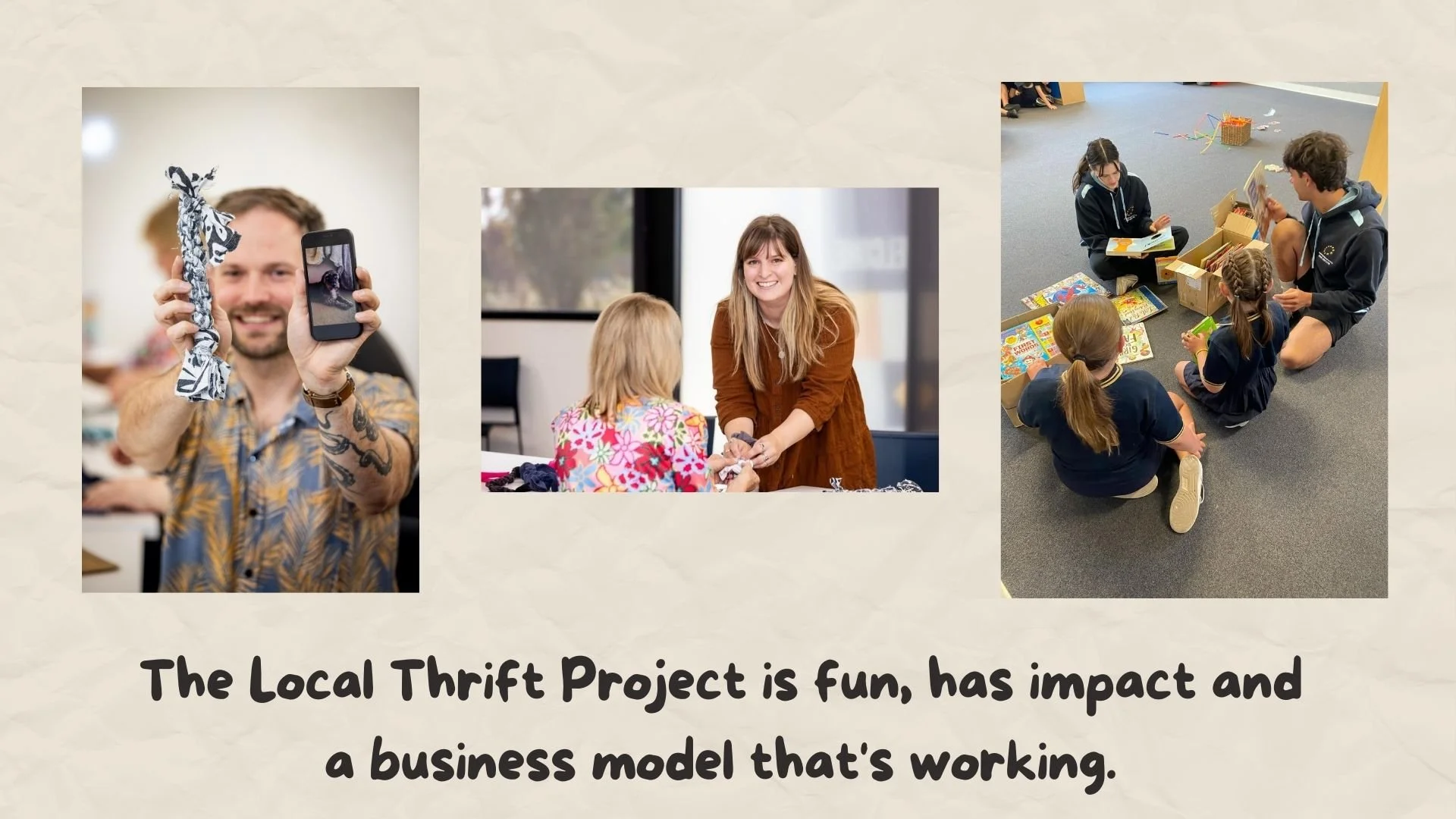
But who are these workshops most suitable for? Our customer research in the accelerator helped us zero in on our target market. Turns out: out-of-school-hours care (OSHC) facilitators are actively seeking value-for-money incursions that they can align with their curriculum. So we pivoted our focus and did just that! Thanks to these conversations: We’ve secured an ongoing partnership with a local OSHC We’ve locked in reuse workshops every school holidays we've built momentum with minimal resources and ive turned a volunteer position into a paid gig! the local thrift project is fun, has impact and a business model that's working.
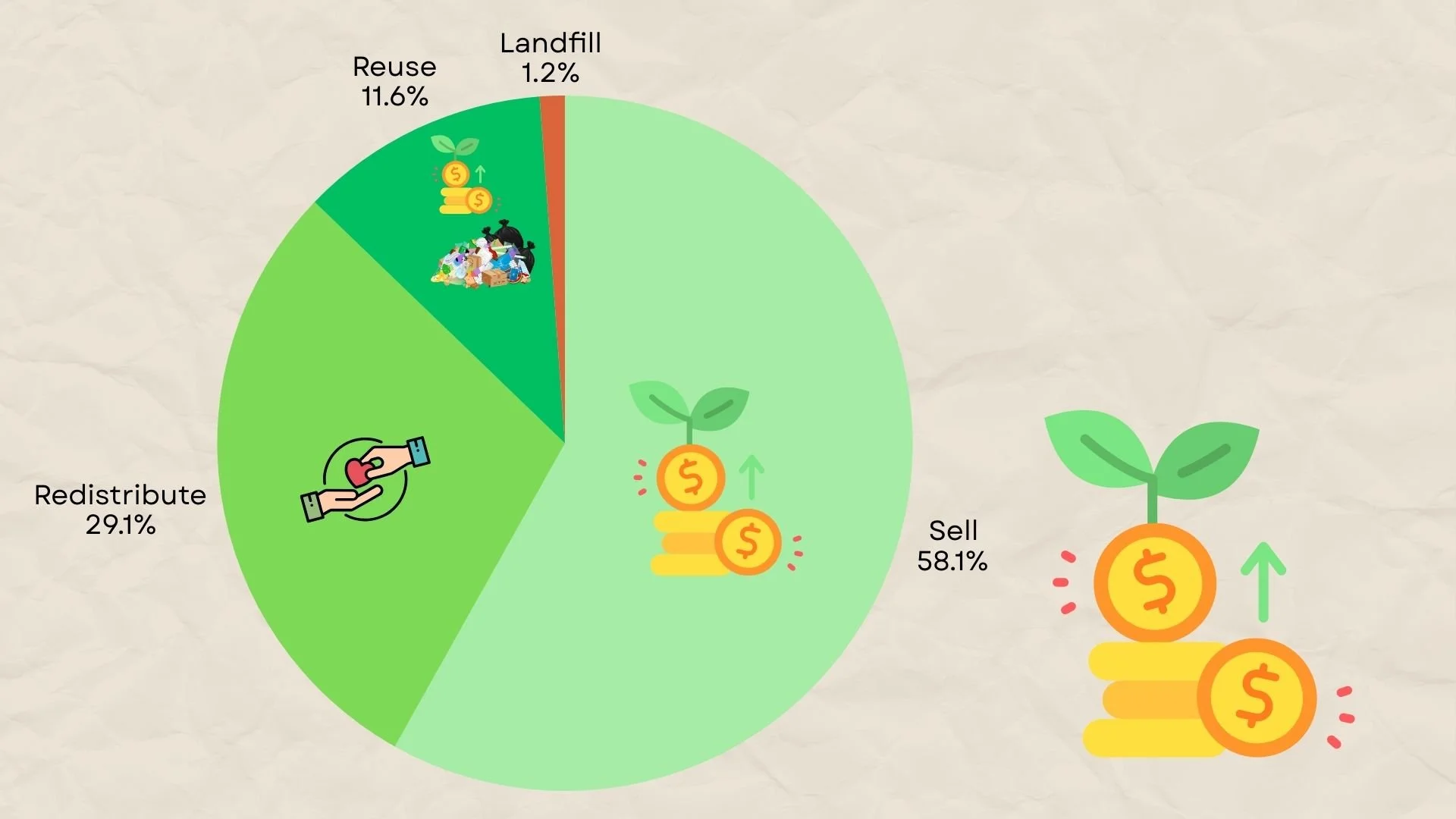
By upcycling and repurposing these broken, unsaleable items we have reduced our shop landfill to a standard council bin a week or less! We’re giving away more stock and having more impact than ever. The shop's income has tripled and so far this year none of our excess has been sent to textile recyclers! But one thing is holding us back which is where my ask comes in.
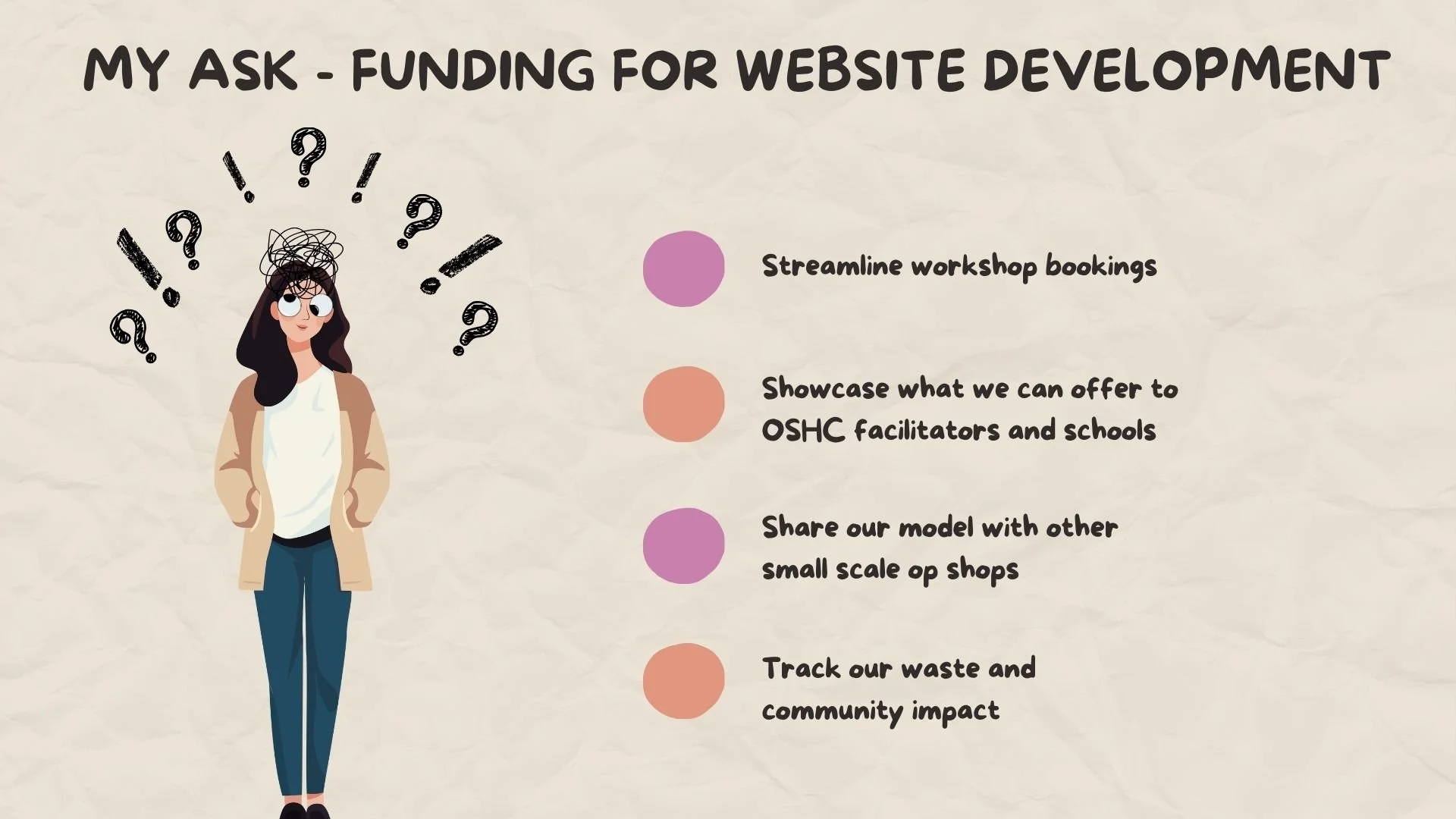
Right now, I’m juggling messages and workshop enquiries across: Two Facebook profiles and inboxes Emails Texts and phone calls It’s messy. It’s inefficient and it’s holding us back. I am asking for the funding for website development to create a streamlined system to: secure workshop bookings showcase to schools and facilitators what we can offer Let other op shops and organisations learn from our model and share ideas Track our waste and community impact

So grab our details using the QR code and follow along. Sign up for our next Sustainability Saturday workshop, next month is badge making using old books and fabrics! and as a final thought remember that if you see a problem and think someone should do something about that, that you are someone and you can be the person who makes a difference. Thank you :)